Semipalmated Sandpiper
Calidris pusilla
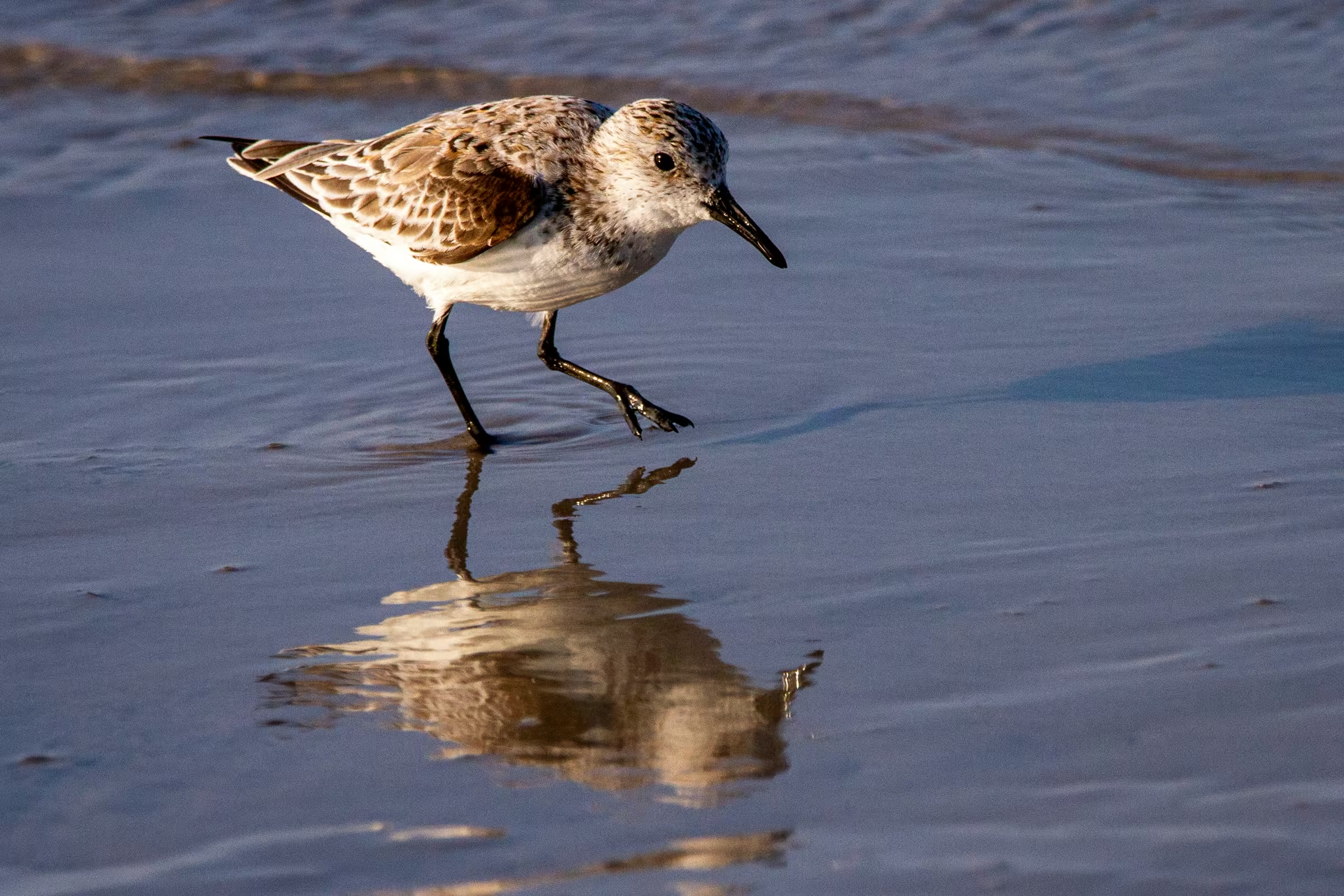
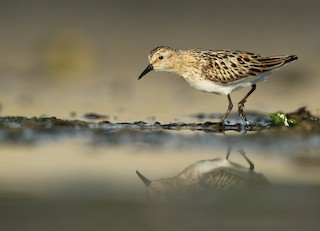
Photo: Joshua J. Cotten · Unsplash · Unsplash License (licence)
Call and song
Recording 1 · call
Recording 2
Recording 3
About the Semipalmated Sandpiper
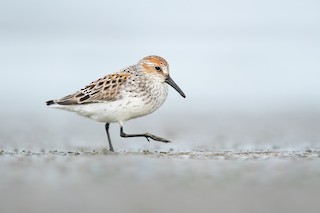
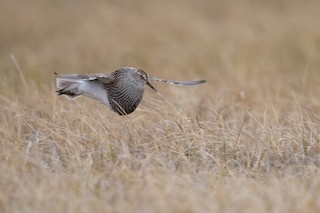
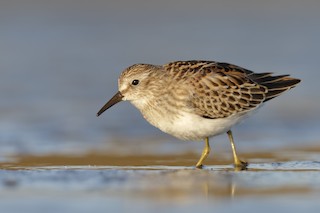
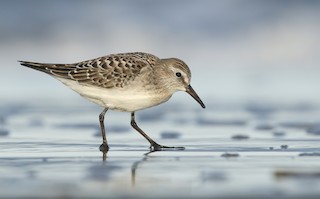
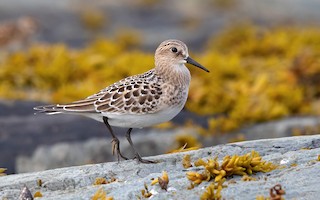
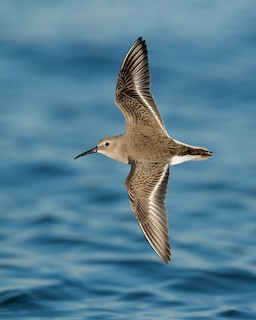
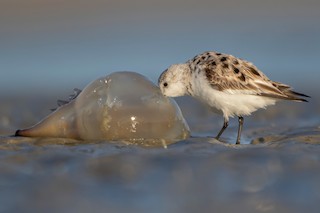
Small, grayish-brown sandpiper. Typically shows relatively short, blunt-tipped bill, but this varies across the breeding range: western populations are shortest-billed, eastern populations are longest, and females have longer bills than males! Also note blackish legs, although they can appear dull gray or greenish. In breeding plumage, fairly pale grayish brown, sometimes with brighter rusty cap and cheek. Nonbreeding is plain gray above and white below. Juveniles have attractive scaly pattern on upperparts, and variable coloration: usually grayish with some buffy areas, occasionally brighter rufous. Most similar to Western and Least Sandpipers. Western averages slightly larger and longer-billed, with brighter rufous on breeding adults and juveniles; nonbreeding birds paler but extremely similar to Semipalmated. Least Sandpiper is darker and browner. Breeds on high Arctic tundra. Migrates to South America for the winter; very rarely lingers in the U.S. past November, unlike Western Sandpiper. Usually found in flocks, sometimes in very large numbers. Prefers open mudflats, but also found in marshes and beaches.
Species account: eBird.org, fetched 2025-12-26 · How these pages are made
Where it has been recorded
Recorded in 70 of the 253 countries we have eBird lists for. Each opens that country's checklist.
- Anguilla
- Antigua and Barbuda
- Argentina
- Aruba
- Bahamas
- Barbados
- Belize
- Bermuda
- Brazil
- Canada
- Cape Verde
- Caribbean Netherlands
- Cayman Islands
- Chile
- Colombia
- Costa Rica
- Cuba
- Curaçao
- Denmark
- Dominica
- Dominican Republic
- Ecuador
- El Salvador
- Estonia
- France
- French Guiana
- Germany
- Greenland
- Grenada
- Guadeloupe
- Guatemala
- Guyana
- Haiti
- High Seas
- Honduras
- Hungary
- Iceland
- Ireland
- Jamaica
- Martinique
- Mexico
- Montserrat
- Morocco
- Netherlands
- Nicaragua
- Norway
- Panama
- Paraguay
- Peru
- Poland
- Portugal
- Puerto Rico
- Russia
- Saint Barthélemy
- Saint Kitts and Nevis
- Saint Lucia
- Saint Martin (French part)
- Saint Pierre and Miquelon
- Saint Vincent and the Grenadines
- Sint Maarten
- Spain
- Suriname
- Trinidad and Tobago
- Turks and Caicos Islands
- United Kingdom
- United States
- Uruguay
- Venezuela
- Virgin Islands (British)
- Virgin Islands (U.S.)