Least Sandpiper
Calidris minutilla
Call and song
Recording 1 · call, flight call
Recording 2
Recording 3
About the Least Sandpiper
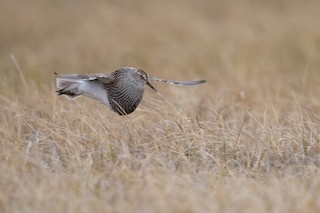
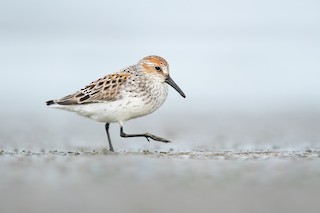
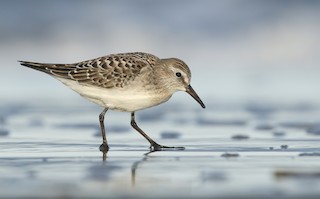
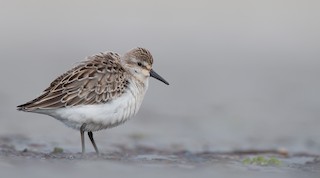
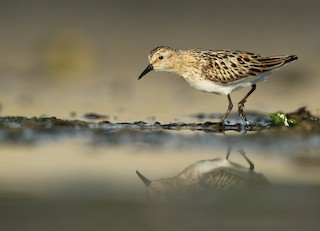
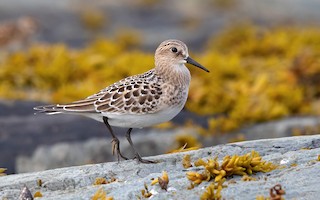
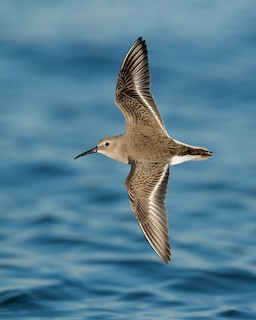
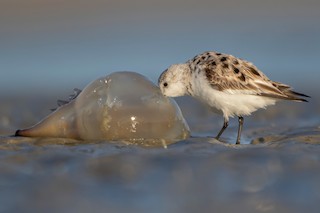
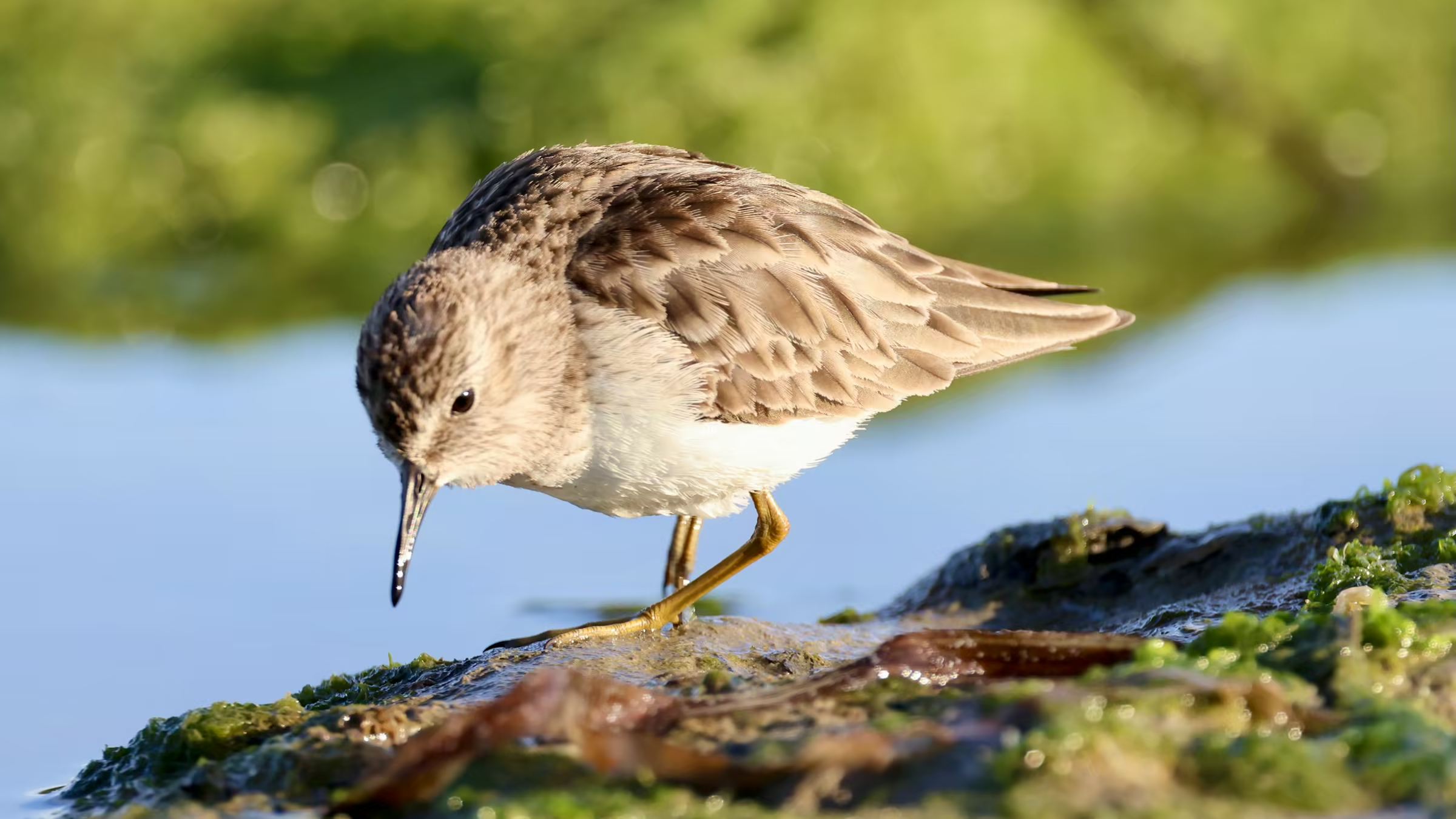
Tiny brownish sandpiper. At all ages, most easily distinguished from other small sandpipers by darker, more brownish coloration. Juveniles are particularly bright with rusty tones on the upperparts. Also note fine-tipped bill and yellowish legs, but beware legs can be covered with dark mud and other peeps (like Semipalmated Sandpiper) can rarely show slightly greenish legs. Habitat and behavior are helpful supporting clues, too. Typically forages in a crouched posture with bent legs, picking for invertebrates in the mud. Often in small loose groups, but not in large, tight flocks like Semipalmated or Western Sandpipers. Prefers drier mud, often on the higher edges of mudflats or small patches of water in marshes. Widespread and common, especially inland. Breeds in various wetland habitats throughout Alaska and Canada. Winters from the southern U.S. to South America. Listen for high-pitched, rolling “greeep!” calls.
Species account: eBird.org, fetched 2025-12-26 · How these pages are made
Where it has been recorded
Recorded in 69 of the 253 countries we have eBird lists for. Each opens that country's checklist.
- Anguilla
- Antigua and Barbuda
- Argentina
- Aruba
- Bahamas
- Barbados
- Belgium
- Belize
- Bermuda
- Bolivia
- Brazil
- Canada
- Cape Verde
- Caribbean Netherlands
- Cayman Islands
- Chile
- Clipperton Island
- Colombia
- Costa Rica
- Cuba
- Curaçao
- Dominica
- Dominican Republic
- Ecuador
- El Salvador
- France
- French Guiana
- Grenada
- Guadeloupe
- Guatemala
- Guyana
- Haiti
- Honduras
- Iceland
- Ireland
- Jamaica
- Japan
- Martinique
- Mauritania
- Mexico
- Montserrat
- New Zealand
- Nicaragua
- Panama
- Paraguay
- Peru
- Poland
- Portugal
- Puerto Rico
- Russia
- Saint Barthélemy
- Saint Kitts and Nevis
- Saint Lucia
- Saint Martin (French part)
- Saint Pierre and Miquelon
- Saint Vincent and the Grenadines
- Sint Maarten
- Spain
- Suriname
- Sweden
- Trinidad and Tobago
- Turks and Caicos Islands
- United Kingdom
- United States
- United States Minor Outlying Islands
- Uruguay
- Venezuela
- Virgin Islands (British)
- Virgin Islands (U.S.)